Iris, the AI Agent for Apple Ads optimization is now available in SplitMetrics Acquire.
How to Make Data-Driven Ad Creatives at Scale for Social Media User Acquisition, the FITAPP Case
 Gabriel Kuriata
Gabriel Kuriata
Gabriel Kuriata 
Effective user acquisition for mobile apps and games in social media is built on engaging ad creatives that fit each platform’s tone, feel, and audience’s mindset.
TikTok advertising is a clear example of the importance of this approach, with its most effective formats incorporating seemingly (or truly) organic, frequently user-generated content (UGC).
This creates a challenge for many user acquisition specialists, who need sufficient creative input to keep up with each social platform’s fast-paced environment and actually meet its intended audience expectations.
To effectively advertise on social media, you need to create the right content at scale to reach diverse audiences and hold their attention.
Our Agency’s experts overcome it by following an insight-led approach to creative production, grounded in audience research, competitor analysis, and current content trends.
In this guide, we explain how it works, step by step, using the example of FITAPP, a recent project our team worked on.
FITAPP wanted to acquire engaged social media users. For that, the app needed high-volume, high-quality ad creatives for its paid user acquisition across multiple platforms. They turned to SplitMetrics Agency for support with efficient planning and the creation of engaging content.
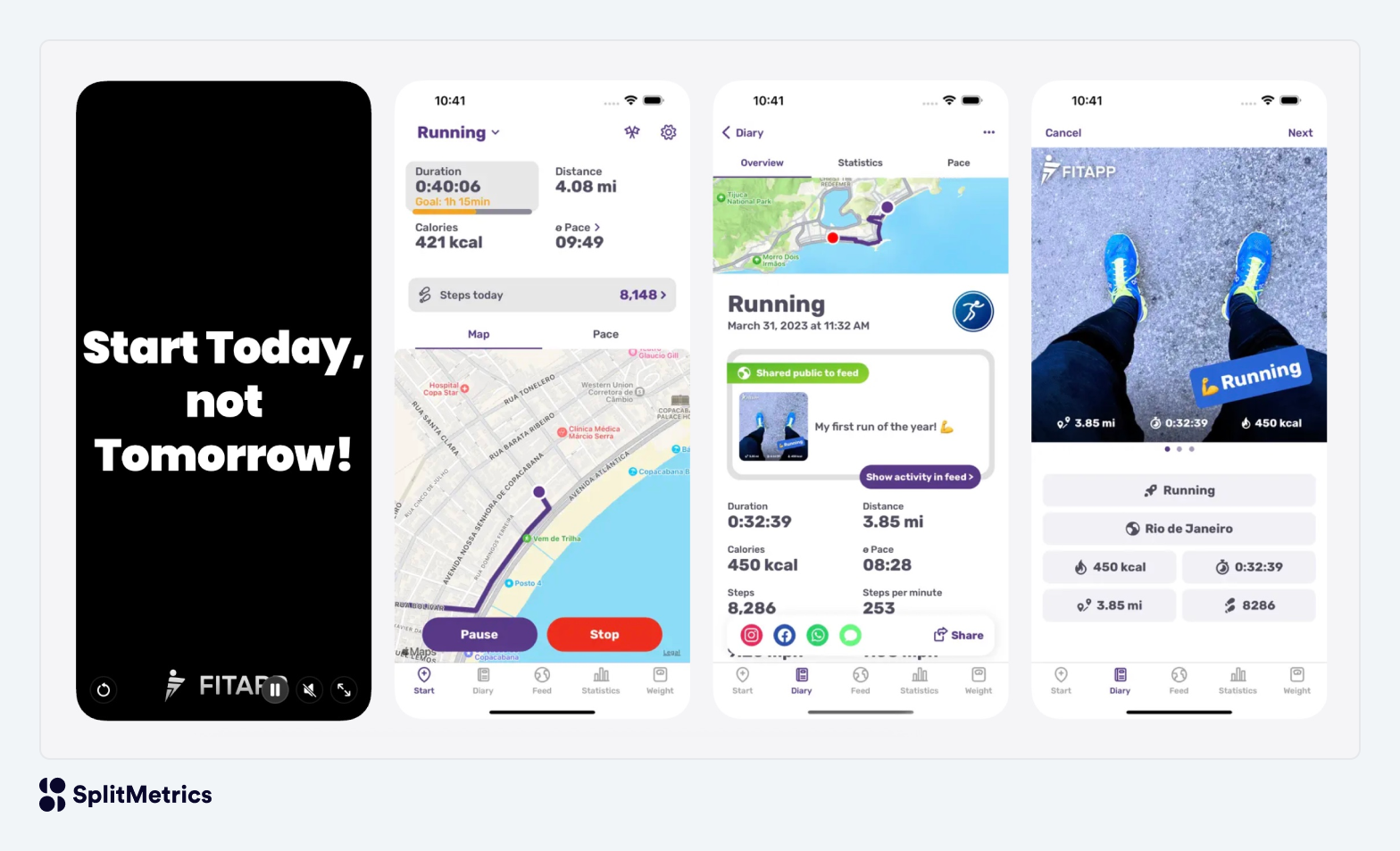
The solution came in the form of the Agency’s structured approach to content planning and creation.
The SplitMetrics’ creative production framework
– Analyze the audience
– Review competitors
– Explore relevant content trends
– Build creative hypotheses.
This approach enables effective idea generation, even on a larger scale. Here’s how it works.
The first step of audience analysis consists of two parts:
Consequently, it ensures the broad scope and practical grounding of a communication strategy.
Creatives that perform are grounded in deep segmentation, going beyond demographics to dive into intent, pain points, or blockers. The real, conversion-rate-impacting value lies in how well they connect to audiences’ emotional drivers, lived experiences, and internal objections.
The first step was to prepare the segmentation framework. Following an extensive research of reviews, forums, and other places where people share their experiences with sports apps, we were able to distinguish the following characteristics of its potential audience:
Goals:
Experience:
Lifestyle:
During segmentation, we’ve selected three segments of the highest priority. Below is their more detailed breakdown:
| Beginners and Restarters | Goal-Oriented Runners | Wellness-Oriented Users |
| Pain points:Fear of failure, lack of structure, low motivation, and being overwhelmed by app complexity. | Pain points:Inconsistent routines, plateauing, no clear plan, and progress tracking. | Pain points:Apps that feel too intense, not for their lifestyle, but rather for athletes. |
| Emotional triggers:Want to feel capable, supported, and seen. Looking for a safe, judgment-free way to start. | Emotional triggers:Motivated by achievement, discipline, and the feeling of measurable growth. | Emotional triggers:Want to feel good, stay consistent, and build trust in routine, without pressure. |
| Needs:Simplicity, clear guidance, and positive reinforcement. Encouraging tone, not performative. | Needs:Structured training, progress tracking, accountability, and a sense of momentum. Tone focused, aspirational, grounded. | Needs:Clean, intuitive UX; flexible tracking; gentle motivation; and messaging that validates small wins and personal effort. |
With the audience segmented, it’s time to validate our assumptions and spot real use cases. For this step, we turned to user reviews and behavioral signals.
To learn more about the actual user experience and identify which features drive satisfaction and how segments align with the app’s strengths, we reviewed user feedback from App Store Connect using the summary feature in AppRadar, our app store optimization (ASO) platform.
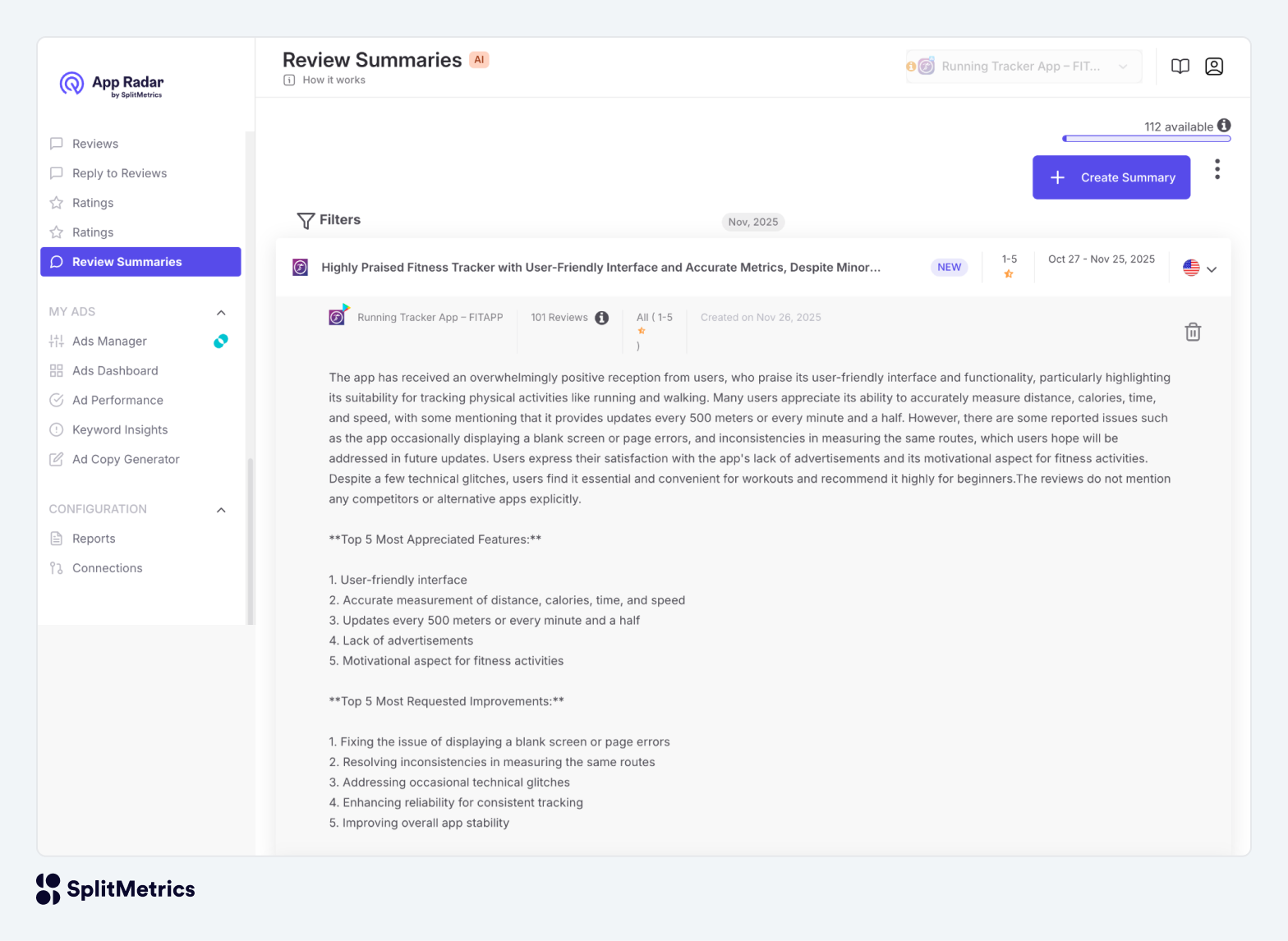
Sentiment analysis showed positive attitudes around the app’s simplicity, versatility, and motivational support. Users consistently pointed to five key strengths:
Reviews also revealed rich emotional use cases:
User reviews helped validate not only how the app is used, but also who it resonates with and why.
By comparing recurring themes in the feedback with our audience segments, we identified where FITAPP naturally delivers the most value, and which users are most likely to benefit from its current experience.
Health-Motivated Beginners and Restarters:
Wellness-Focused Lifestyle Movers:
Goal-Oriented Intermediate Runners
Once we clearly understood who FITAPP serves and how, the next step was to explore how other apps in the category address similar users and what makes them stand out (or not).
Competitive research covered App Store and Google Play data, as well as publicly available creative libraries (Facebook Library, TikTok Library, Google Ads Transparency). Its goal was to understand:
All this to know how FITAPP compares in terms of product experience and creative opportunity.
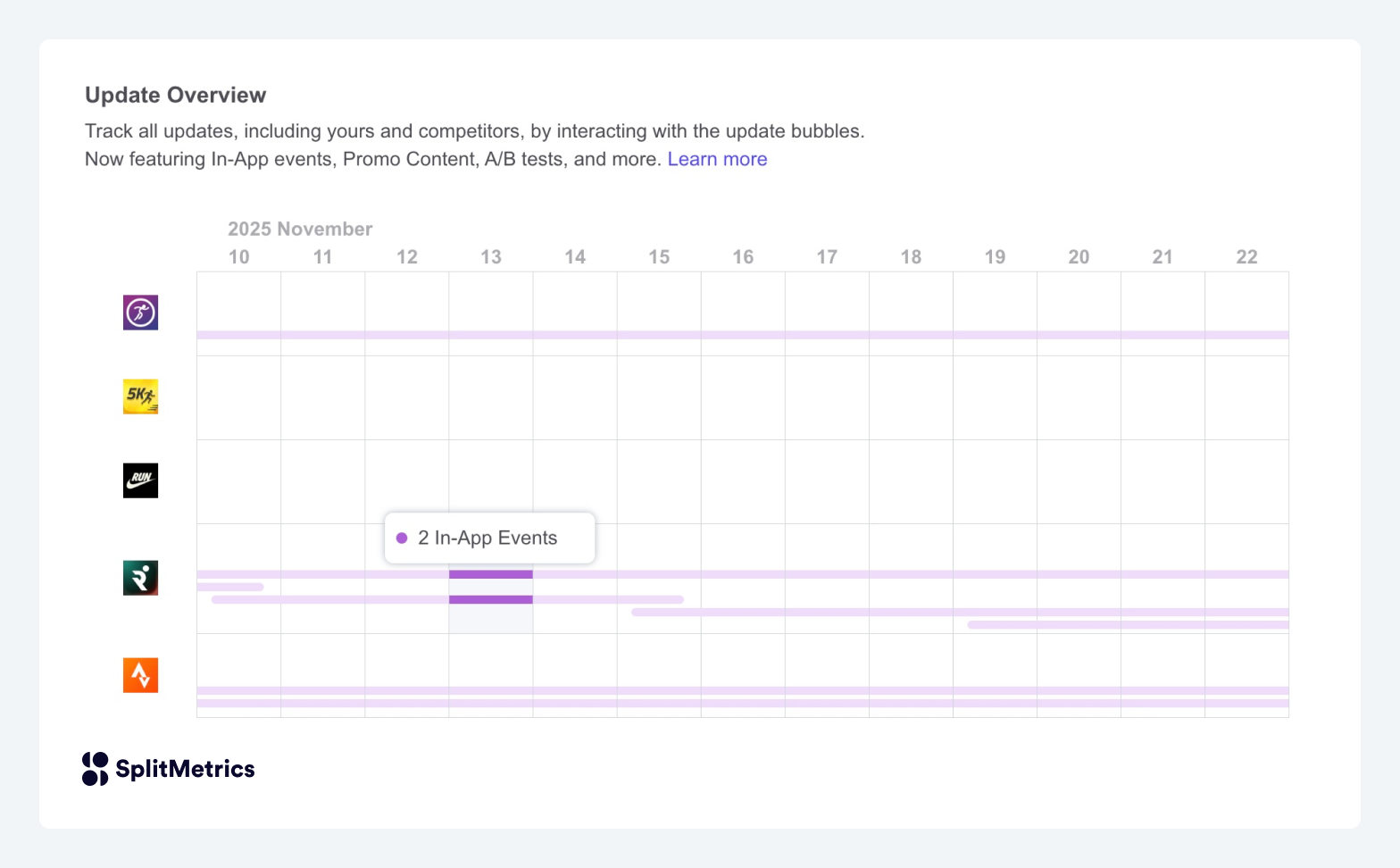
We focused on 4 leading apps that regularly appear in the fitness/wellness category for running and walking: Strava, Runna, Nike Run Club, and 5K Runner: Couch to 5K. Below is their more detailed breakdown:
| Strava | Runna | Nike Run Club | 5K Runner |
| Audience | |||
| Serious amateur and semi-professional runners, cyclists, and multisport users. Socially motivated, data-driven, and competitive. | Intermediate to committed runners who want a structured training plan. Often goal-oriented and motivated by measurable progress. | Broad, from beginners to hobby runners, motivated by coaching, design, and the Nike brand. Appeals to those who want inspiration more than analytics. | True beginners with zero fitness foundation. Motivated by transformation and “getting off the couch.” Often self-doubting and unsure where to begin. |
| Strengths | |||
| Advanced GPS tracking and performance analyticsStrong community features (leaderboards, clubs, feed)Integration with smartwatches and fitness devicesHigh engagement among “serious” athletes | Personalized training plans written by real coachesClear program structure with progressionModern, minimal UX and brandingStrong credibility and partnership potential (Strava recently acquired Runna) | Guided audio runs with motivational coachingStrong visual design and brand storytellingFree access to high-quality training contentGamification (achievements, milestones, badges) | Step-by-step coaching to go from walking to running in 8 weeksLow-pressure, high-accessibility approachGreat entry point for the unmotivated or uncertainAffordable and focused |
How we Analyzed: to identify what works creatively in this category, we combined platform-native tools and competitive intelligence:
After reviewing competitor ads and scanning what creators are actively posting in the running and wellness space, we collected a series of real content examples. These videos reflect how creators naturally communicate with their audiences through storytelling, habit tracking, motivation, or wellness-focused formats.
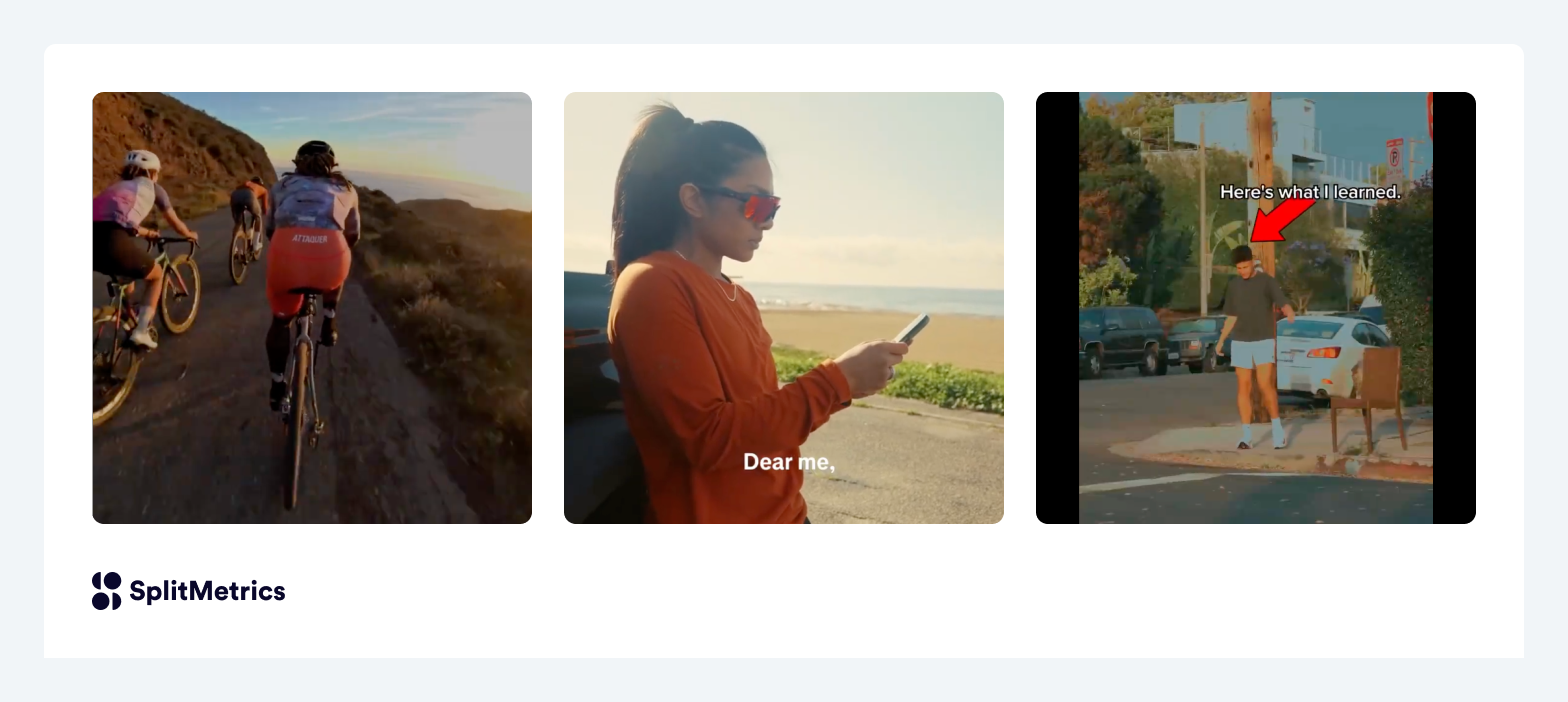
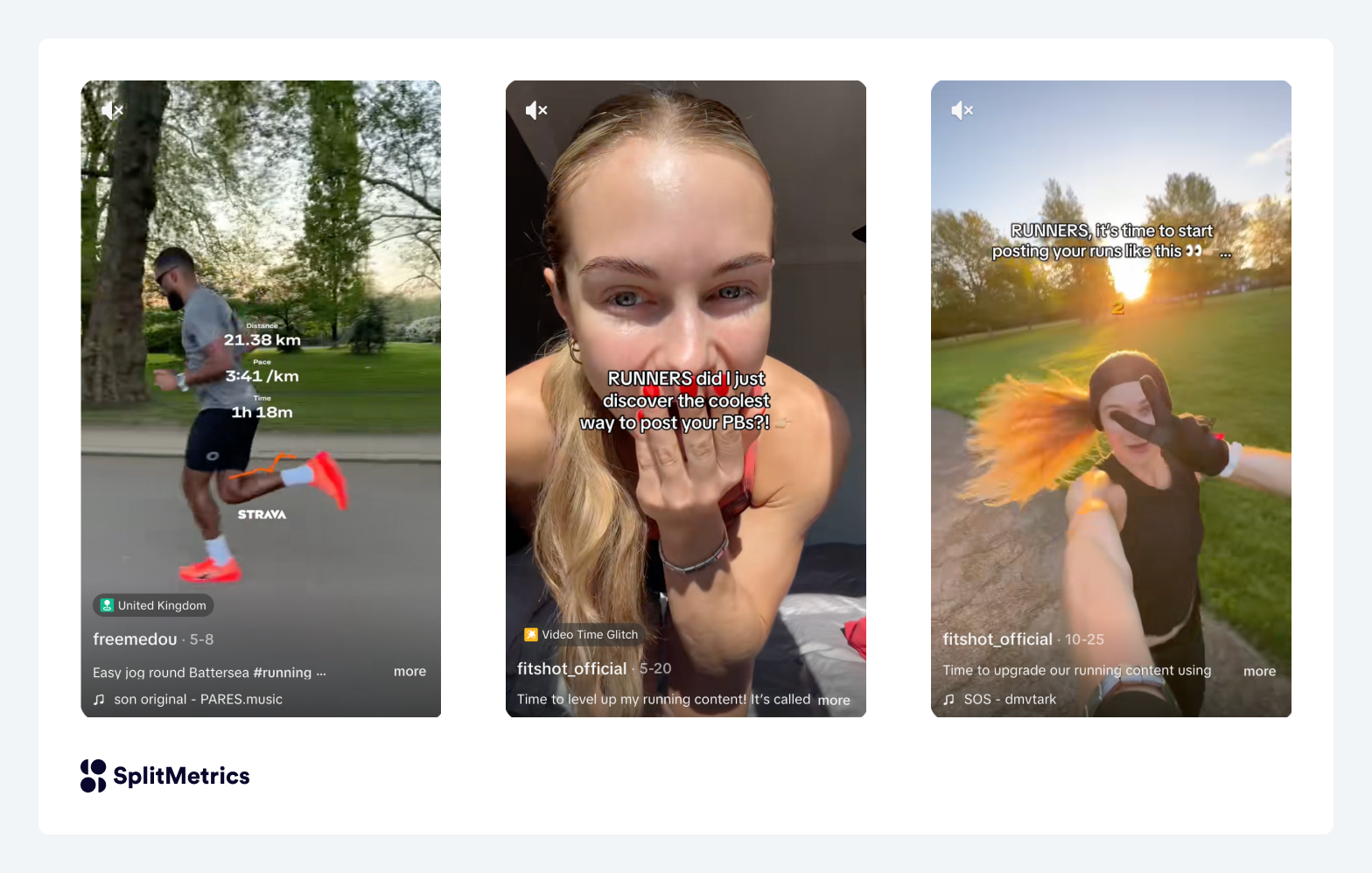
In parallel with our content review, we conducted a focused audit to identify creative trends consistently gaining traction across TikTok, Reels, and Meta ads. By observing what formats dominate user feeds, both in and beyond the fitness space, we pinpointed high-performing styles that reflect current platform behavior and user expectations, like the following:
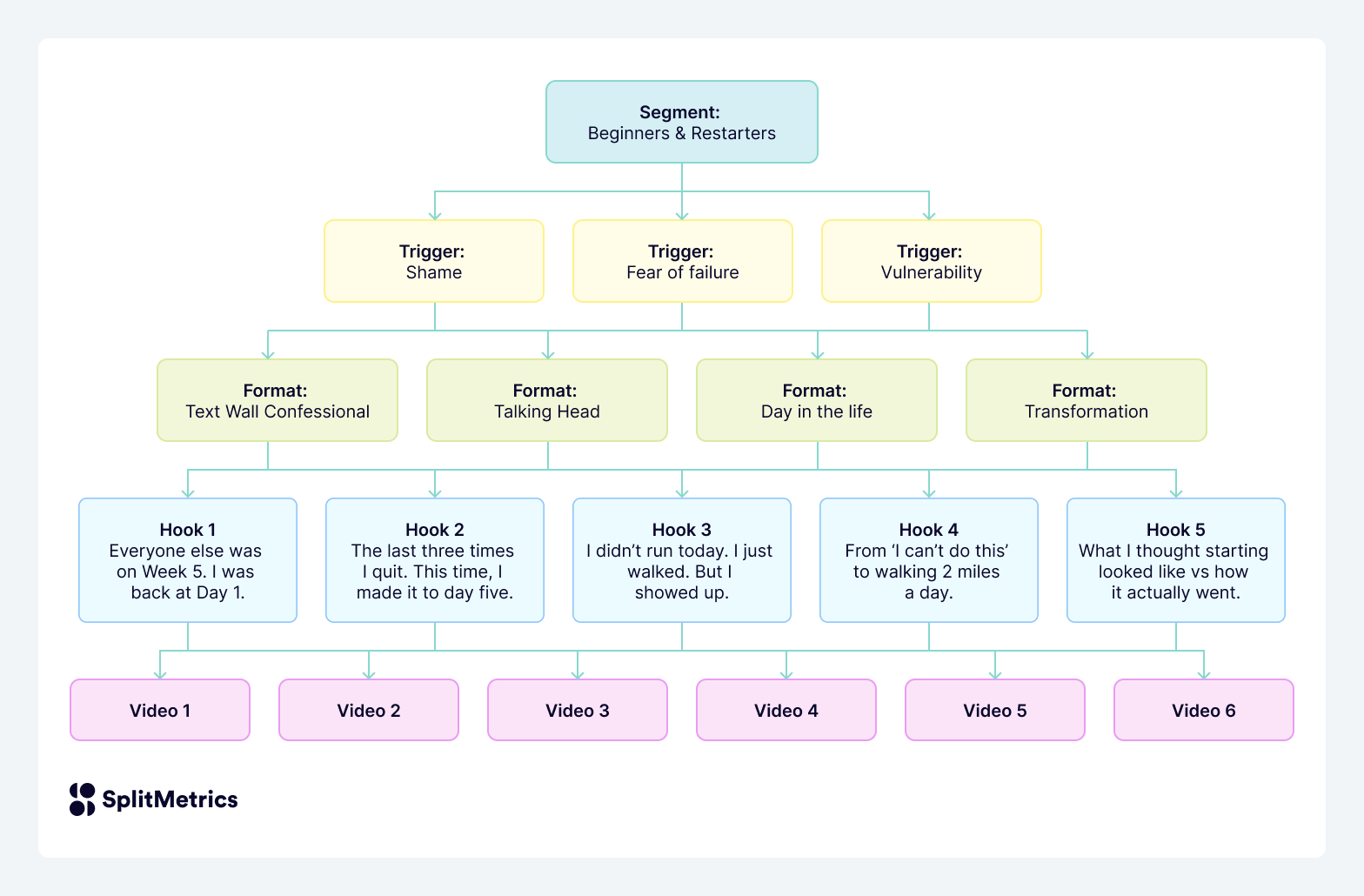
Equipped with audience, competitor, and trend insights, we were ready to create a set of hypotheses to guide FITAPP’s creative production. To maintain communication at a level suitable for social media, we use a scalable, modular, and insight-driven template.
It allows us to mix and match audience segments with relevant emotional triggers, trending formats, and hook angles, giving us multiple variations to test around the same user profile.
The template is simple, combining four core elements of engaging communication:
Let’s examine it on the example of health-motivated beginners & restarters.
| Audience segment | Emotional trigger | Format trend | Hook type |
| Health-Motivated Beginners & Restarters Wellness-Focused Lifestyle Movers Goal-Oriented Intermediate Runners | ShameFear of starting… Burnout, overwhelmCraving control… Need for accountability, structure, progress… | POV VoiceoverText-Wall ConfessionalDay-in-the-LifeTransformation ArcTalking Head / Mini Interview | Emotional question: “What if you fail again?”Bold statement: “I cried after 800 steps.”Story start: “Day 1. Again.”Truth bomb: “This isn’t about running.” |
This modular system allowed us to generate dozens of performance-optimized creative concepts, tailored to mindset, platform behavior, and real emotional context. Combining and matching these elements allows easy output, as shown in the examples below:
Segment: Beginner Restarter → Trigger: Shame → Format: POV Voiceover → Hook: “I was embarrassed to even open a fitness app.”
Segment: Lifestyle Mover → Trigger: Burnout → Format: Day-in-Life → Hook: “Burned out? Start with a walk.”
Segment: Intermediate Runner → Trigger: Accountability → Format: Metric Overlay → Hook: “Week 3. I didn’t want to run, but I did.”
More variations can be easily generated for the same audience:
FITAPP doesn’t have a single standout feature or unique proposition that clearly separates it from competitors like Strava, Runna, or Nike Run Club. That’s not a consideration, as most smaller apps don’t start with differentiation.
Consequently, our initial strategy focused on replicating what’s proven to work in the market, adapting those insights to FITAPP’s tone and audience, and analyzing performance.
We start by borrowing best practices from top-performing competitors:
The goal here is speed and efficiency: to unlock traffic fast, gather engagement data, and see which user motivations (habit-building, transformation, wellness, progress) convert best.
Once we identify what resonates, e.g., emotional tone, simplicity, or beginner-friendly design, we can build creative and product narratives around it.
The insights from early campaigns will help define FITAPP’s future edge: Is it the emotional tone (“No pressure. Just progress”)? Is it the inclusivity (running, walking, cycling, anyone can move)? Or is it the simplicity (a tracker that doesn’t overcomplicate things)?
Once we defined our go-to-market approach, start with proven formats, learn fast, and evolve, the next step was turning that strategy into specific, actionable creative directions.
To do that, we looked closely at what’s currently performing across the running and walking app category:
For FITAPP, we chose to move forward with a UGC-style creative approach that mirrors the natural, relatable content our target users already see in their social feeds. It offers low production overhead, high emotional relevance, and flexibility to explore different angles fast.
We also leaned on proven formats from top-performing competitors, adapting them to FITAPP’s voice, features, and user mindset.
Examples of emotional triggers for:
Health-Motivated Beginners and Restarters: “How do you start again when you’ve failed ten times before?” “I was embarrassed even to open a fitness app.”, “After months of burnout, I just needed something simple to start again.”
Wellness-Focused Lifestyle Movers: “Could five minutes outside fix your whole day?” “Not every workout needs to hurt.” “My best ideas come between mile one and mile two.”
Goal-Oriented Intermediate Runners: “When was the last time you pushed past your comfort zone?” “If you don’t track it, did it even happen?” “I used to simply run. Now I actually track what matters.”
Each creative concept includes multiple variations, allowing us to test different character types (gender, age, background), emotional hooks, video lengths, and content structures. The goal is to identify what resonates across segments while maintaining production efficiency. We proceed with the concepts listed below.
Natural, selfie-style videos featuring diverse everyday characters (different genders, ages, ethnicities), with varying hooks and video lengths (15-30 seconds).
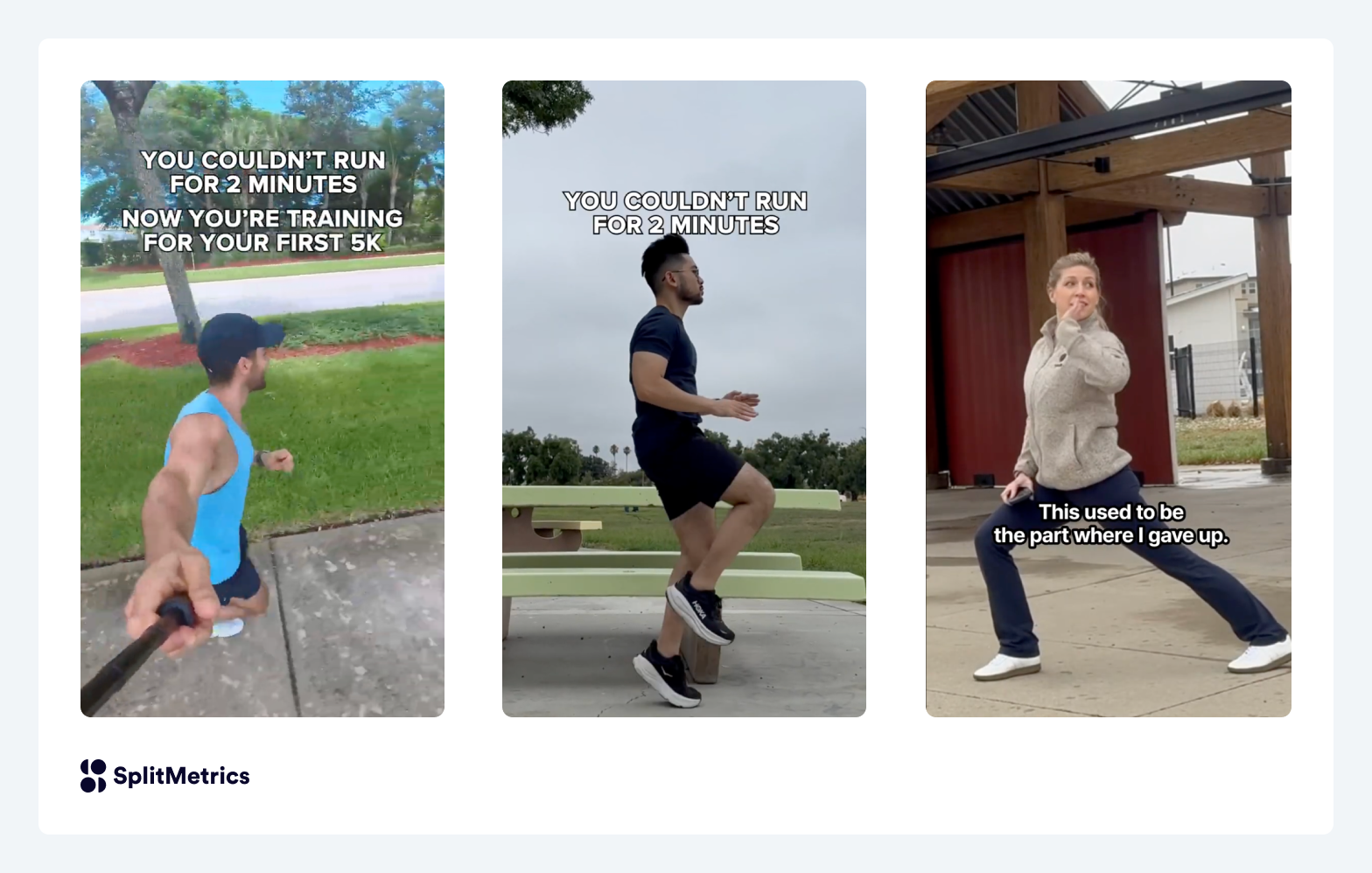
Below is a sample video ad of this type:
Personal journeys with visible or emotional change. Versions include the following formats:
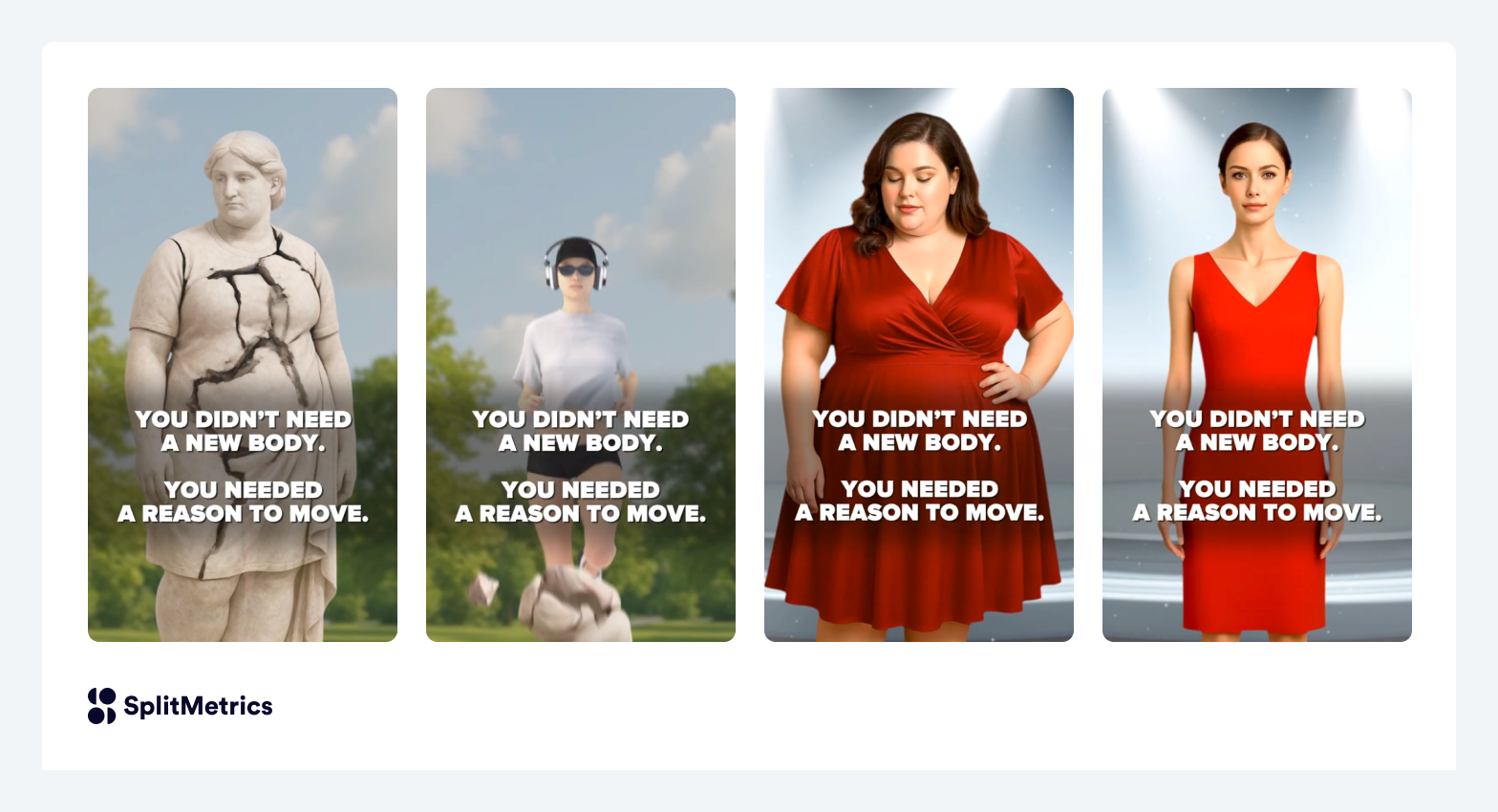
Below is a sample video ad of this type:
Light, feel-good videos featuring pets who unintentionally become workout partners.
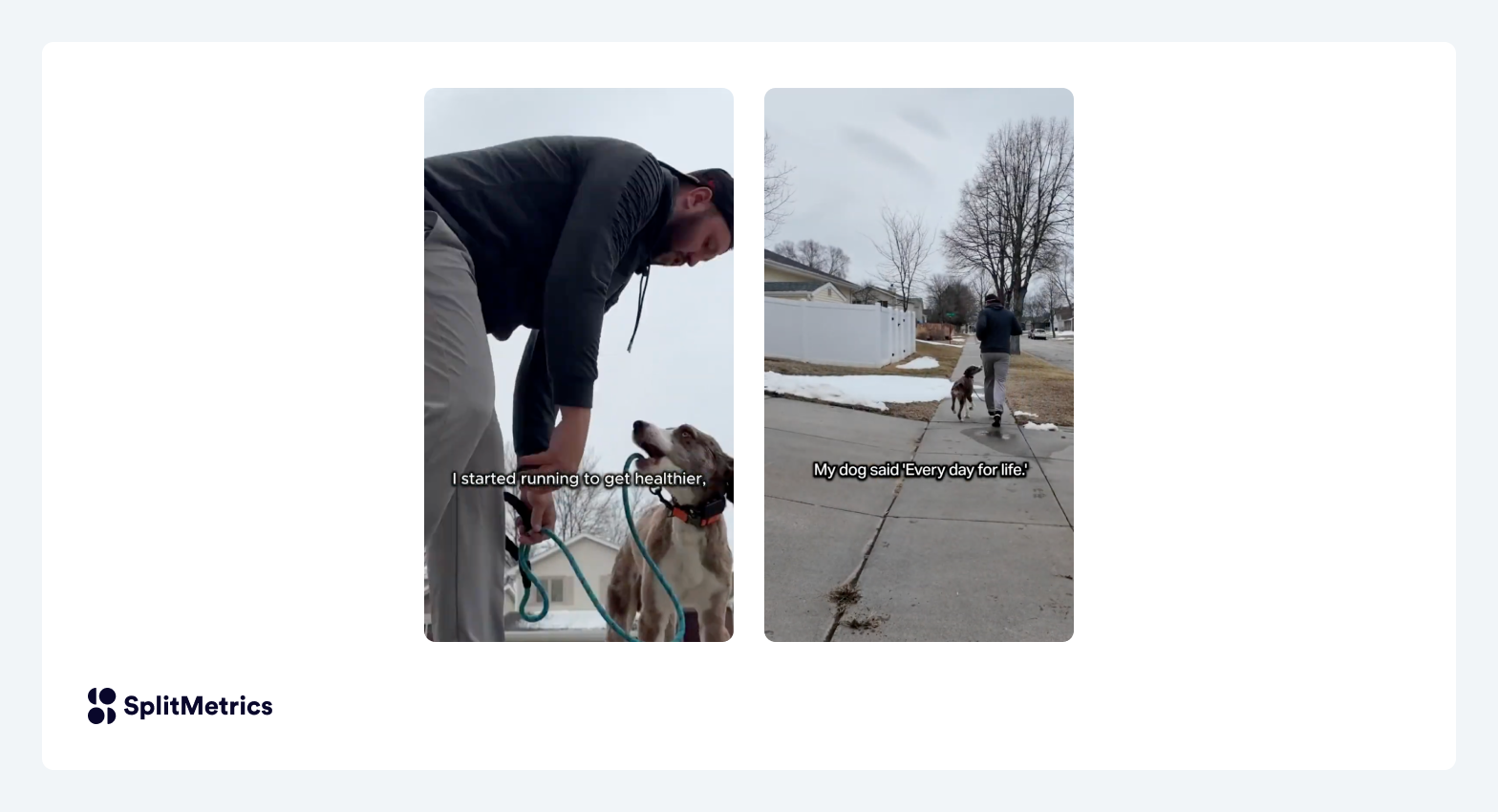
Below is a sample video ad of this type:
Short clips where users answer 1–2 questions about their motivation to start.
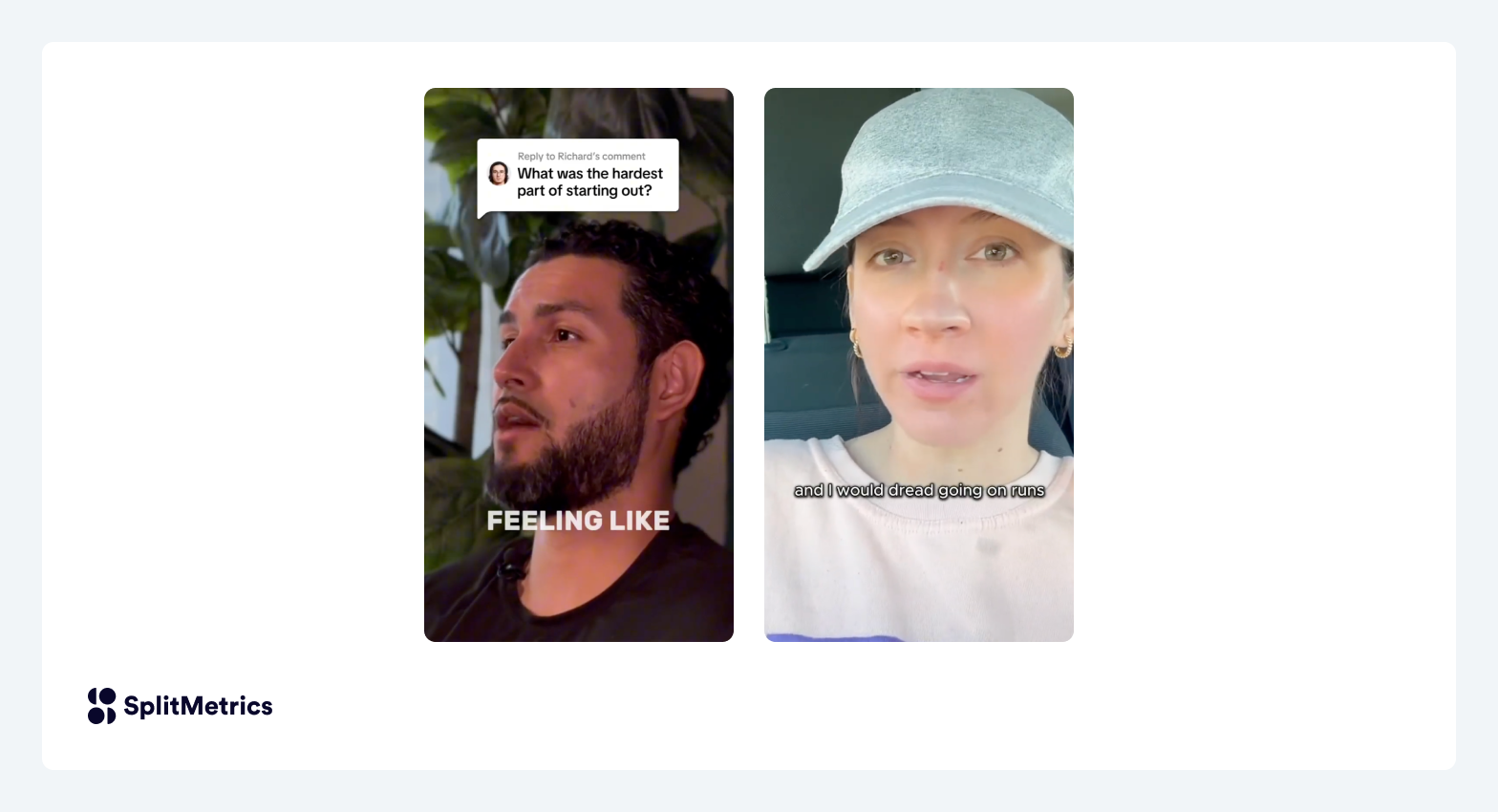
Below is a sample video ad of this type:
Progress-style content designed around beginner race prep. Variations include referencing different distances (5k or 10k).
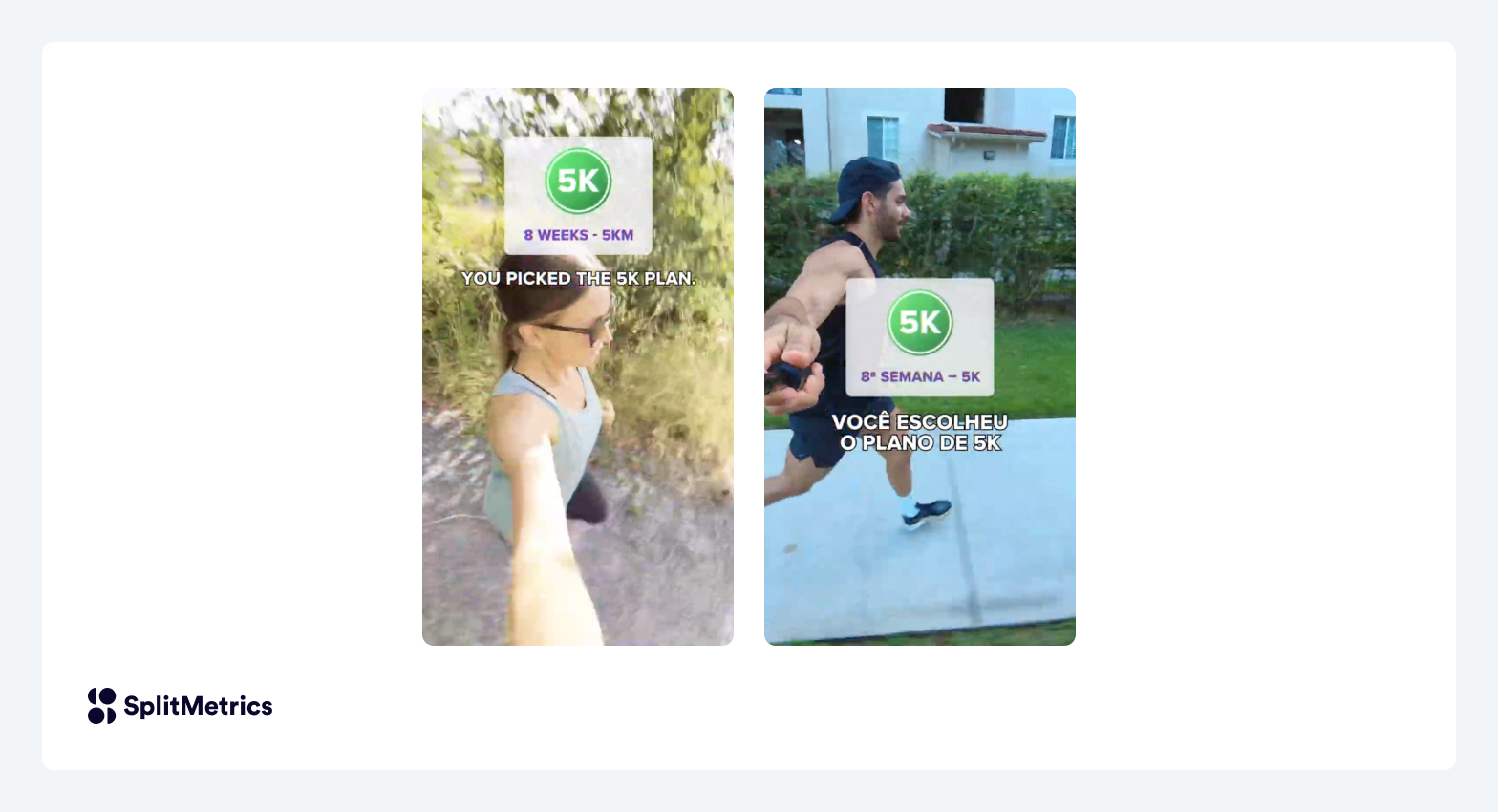
Below is a sample video ad of this type:
Production itself is a straightforward process. Once creative concepts are defined, we build simple, focused briefs for UGC creators: outlining key talking points, tone, visual style, and hooks to include.
As soon as content is delivered, we move into production with designers: editing frames, selecting music, layering in text variations, and finalizing assets for each platform. This two-step workflow keeps production fast, modular, and performance-driven.
In social media user acquisition, relying on guesswork or one-off creative hits is not sustainable. As demonstrated by the FITAPP case, a methodical approach to ad creatives and content is necessary, grounded in audience analysis, competitor review, and current creative trends.
This approach ensures that every creative asset is not just engaging, but also a strategic, data-informed investment that directly supports paid user acquisition and long-term growth.