








Hidden City published by G5 Entertainment is a mystery adventure game with more than 10 years of history, combining hidden object gameplay with deep narrative immersion. Players step into the City of Shadows, a lively metropolis inspired by Victorian noir and magical realism. With more than 130 detailed locations and 150 storylines, the game offers the feeling of a vast, constantly evolving world.
Hidden City primarily appeals to mature casual players, mostly women, who are drawn to atmospheric gameplay, mystery, and intellectually engaging experiences.
As part of its ongoing ASO strategy, the team partnered with SplitMetrics Optimize to validate a new icon concept focused on strengthening the game’s visual identity and improving conversion performance on the App Store.
Challenge
One of the key strategic goals was to strengthen the presence of the City itself within the game’s visual communication.
Hidden City is a game both about a mysterious city and about hidden object gameplay. My goal was to bring the City itself to the forefront of our visual communication, while making sure players wouldn’t mistake the game for a city-building simulator.

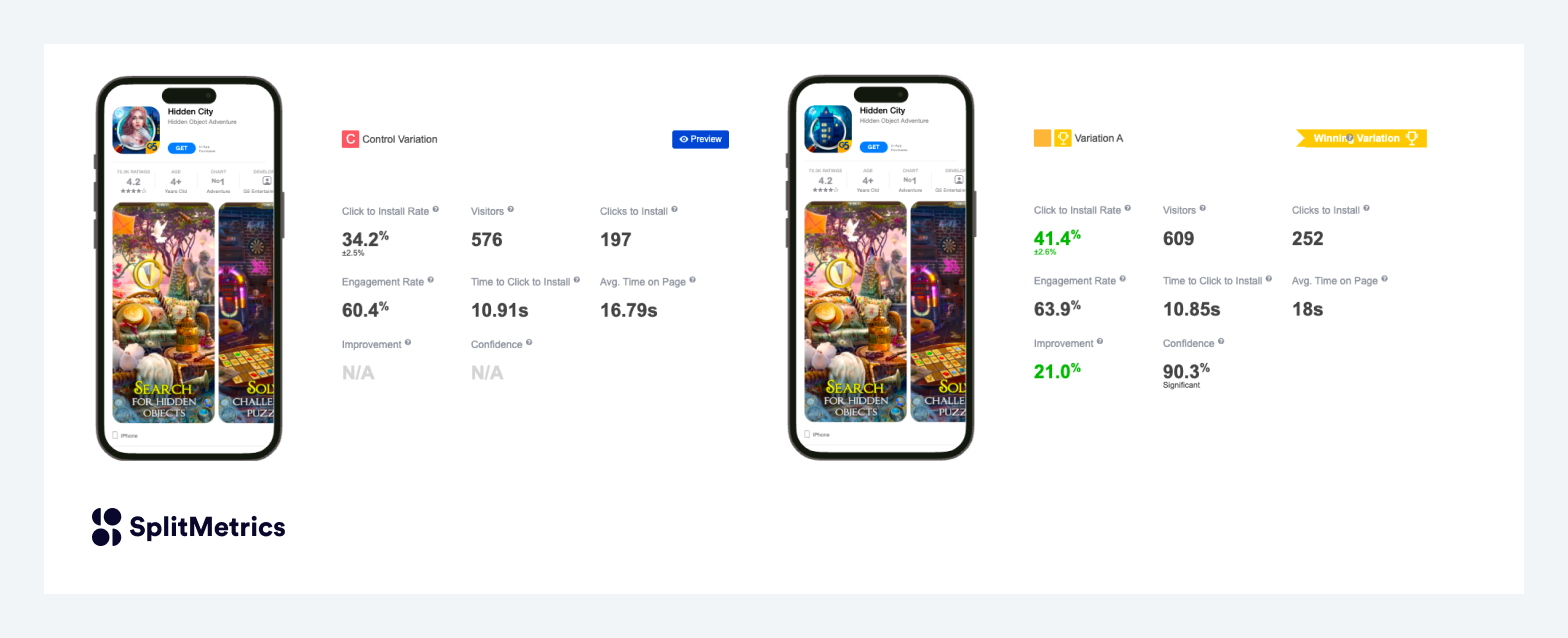
This led to a new icon hypothesis. The team placed a detailed building inside a magnifying glass, a long-established and instantly recognizable symbol of the hidden object genre.
The objective was to communicate three core pillars of the game within a single visual:
- Hidden object gameplay
- The scale of the city
- The game’s mystical atmosphere
The team needed a way to validate whether the new visual direction would improve conversion performance before rolling the icon out globally.
Solution
At the time, native A/B testing inside the App Store was not yet available. Concept validation was crucial for reducing the risks associated with changing an iOS icon across the entire audience. So, the Hidden City team used SplitMetrics Optimize to run a structured App Store experiment in an environment closely resembling the real App Store experience.
The experiment focused specifically on the app icon. For testing, the team used the Sequential testing methodology with:
- MDE: 20.0%
- Significance: 10.0%
- Confidence level achieved: 90.3%
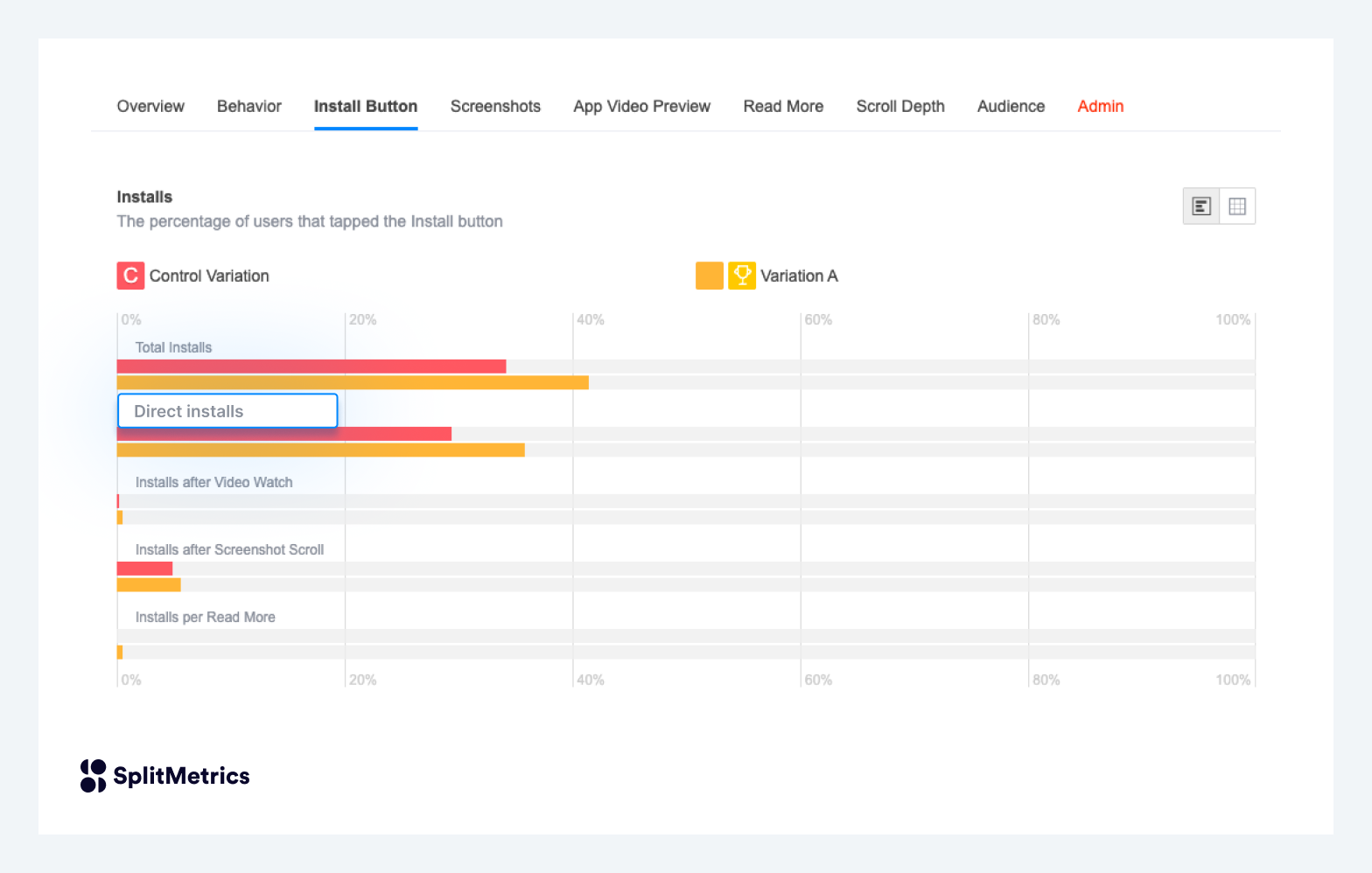
The primary KPI was Click-to-Install Rate, selected for being the closest available proxy to conversion rate on the App Store.
Results
The experiment delivered a strong positive signal during testing, with the experimental icon outperforming the control variant by 21% in Click-to-Install Rate.
The results were later validated after implementation:
- +10% installs worldwide
- +6% installs in the US market
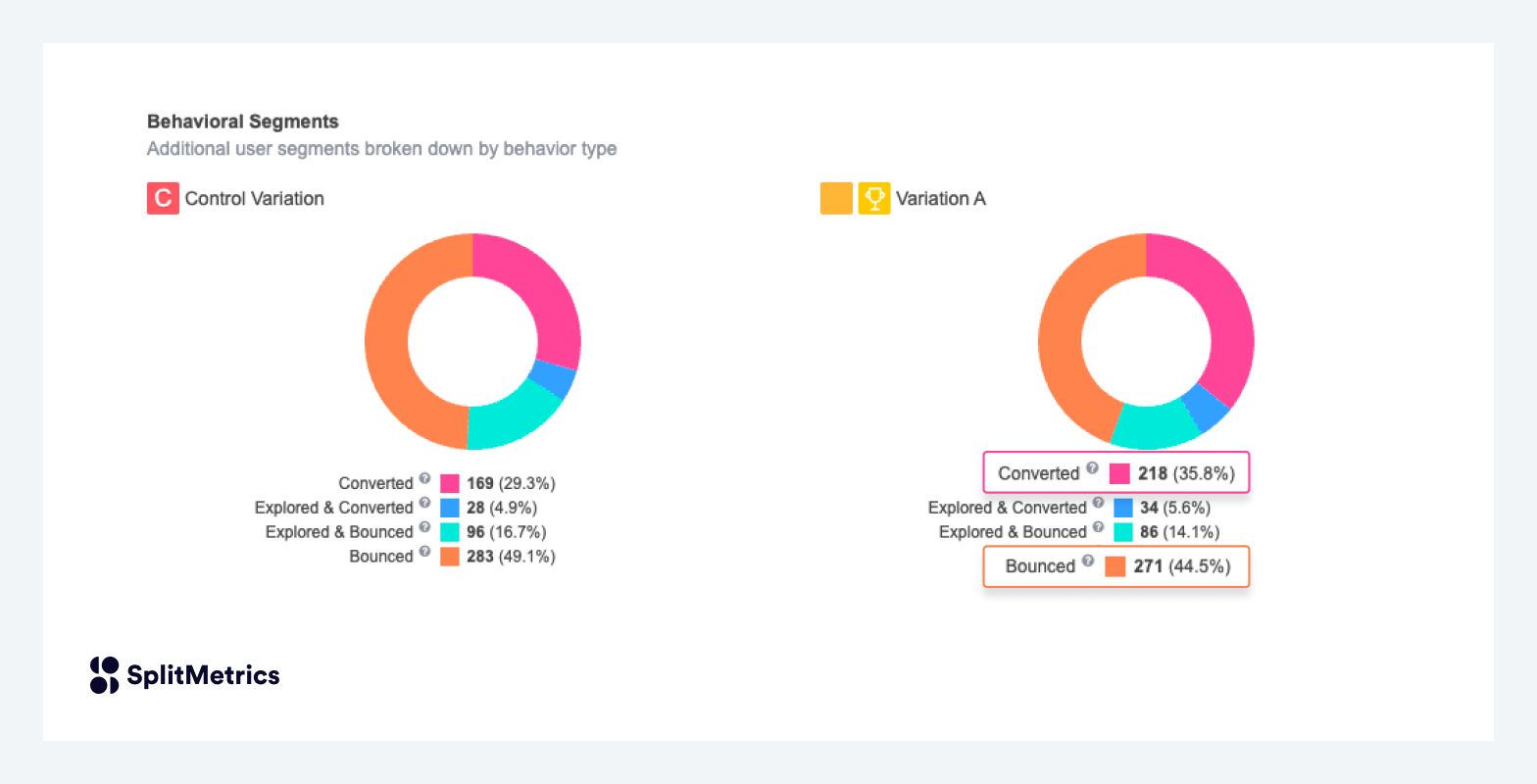
The winning variation resonated strongly with users because it clearly communicated the game’s core identity through a combination of recognizable hidden object symbolism, city imagery, and mystical atmosphere.
The icon resonated with players who connected with the combination of city exploration, hidden object gameplay, and mystery. These three elements describe the essence of our game.
The Hidden City team also highlighted the collaborative relationship with the SplitMetrics team as an important part of the experience.
In particular, the team praised their customer success manager for being highly involved throughout the experimentation process and providing fast, reliable support whenever needed.
Natalie is our customer success manager. Her deep involvement in our experiments made working with SplitMetrics an extremely smooth and enjoyable experience. We always knew that every question would get an answer and every issue would be resolved quickly.
For the Hidden City team, the whole experiment reinforced the importance of continuous ASO iteration and data-driven creative validation. By testing icon concepts in a store-like environment before rolling out changes globally, they were able to reduce risk, better understand user perception, and confidently implement a visual direction that improved both conversion performance and product positioning.
 Acquire
 Services