


From Creative Volume to Creative Systems: How SplitMetrics’ Experts Build Scalable Creative Testing
 Anastasiya Starovoytova

Learn
Automating Apple Ads campaigns: how to systematically grow your app performance

Black Friday Playbook on Apple Ads Strategy: Defend Your Brand & Capture Demand
Technology
Growth Services
Our AI & Data
Anastasiya Starovoytova

This article is written by Kseniya. She has a wealth of experience spanning over 10 years in the Gaming and Mobile app industries. She excels in analyzing data, identifying key performance indicators, and implementing data-driven strategies.

Creating more ads does not automatically create more growth. In performance creative, scale usually comes not from volume alone, but from having a clear system behind production: the system that defines what exactly you are testing, why you are testing it, and what you are learning from each cycle.
When you build creative production as a framework, you can move from isolated ideas to repeatable patterns. That makes testing more structured, insights more useful, and performance easier to scale.
Below is the approach we used while working on the Gibson App case. You can apply the same thinking to your own projects.
1. Start with audience segments, not just ad ideas
The first step is to define the audience through stage, pain, and intent. Creative usually performs better when it appeals to a very specific situation, rather than trying to cover everyone at once.
In the Gibson App case, we did not treat guitar learners as one broad audience. We split them into clearer groups based on where they were in their journey:
The approach immediately gave us a more useful structure for production. Instead of making generic guitar-learning creatives, we were able to develop different angles for different audience realities.
For example:
Once segmentation is clear, creative work becomes much easier to organize. You are no longer just generating concepts, you are building messages for distinct user states.
2. Use real audience insight to define what each segment actually needs
Once the segments are clear, the next step is to understand what each group is struggling with in real life. The best inputs usually come from places where users describe their experience in their own words: app reviews, comments under creatives, Reddit threads, forums, Facebook groups, and similar communities.
For Gibson App, finding the input was the key part of the process. We looked at reviews and community discussions not only to understand what people liked about the app, but also to identify:
That gave us a much sharper view of each segment.
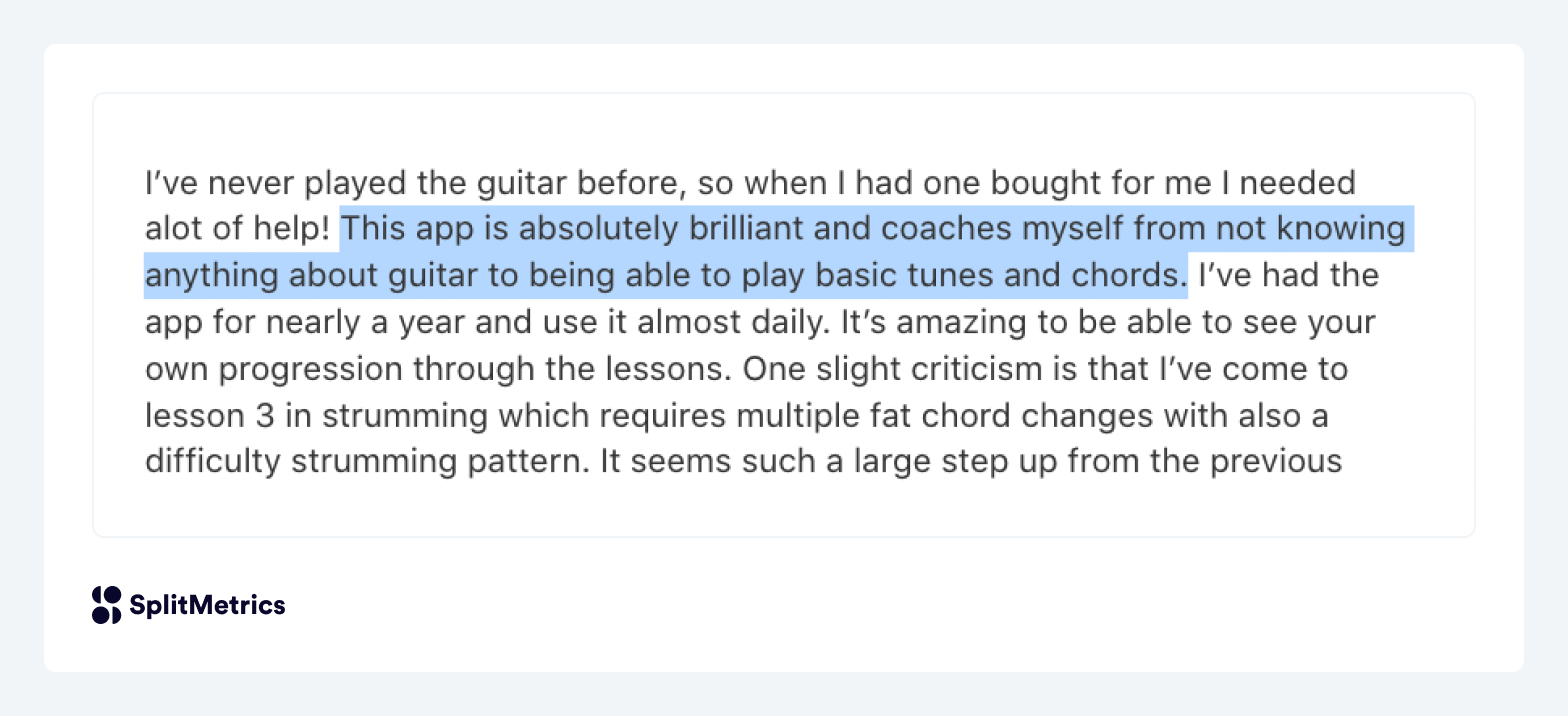
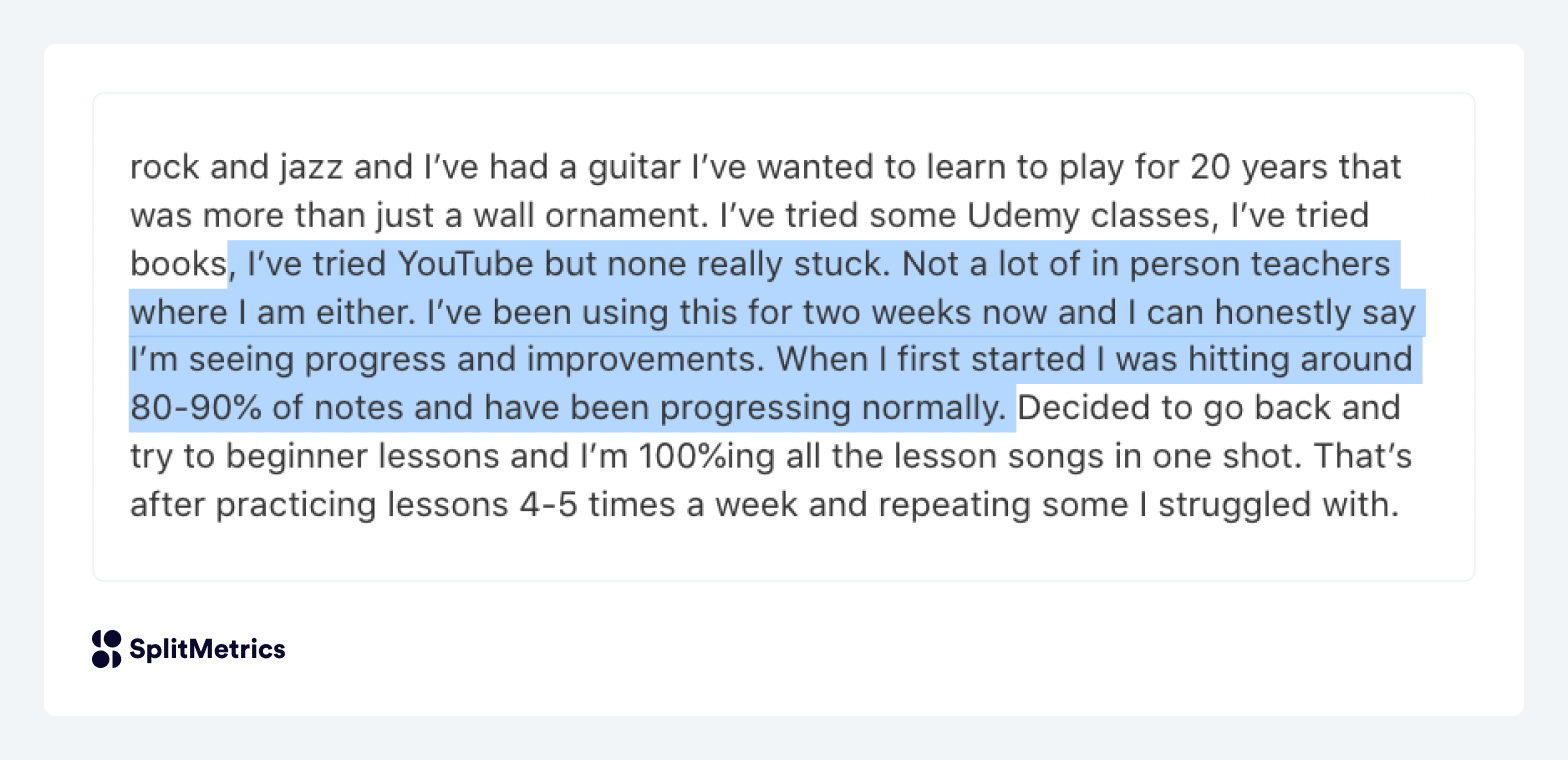
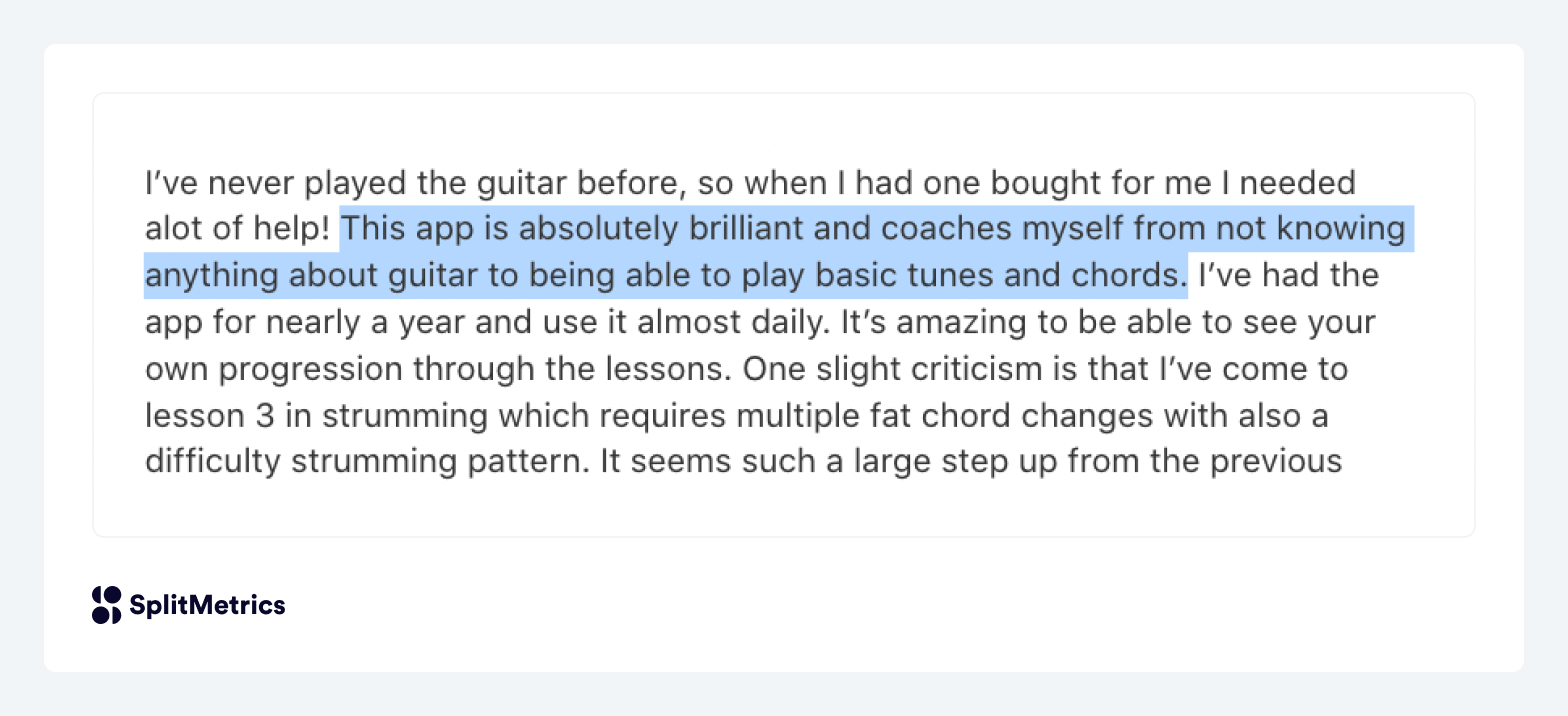
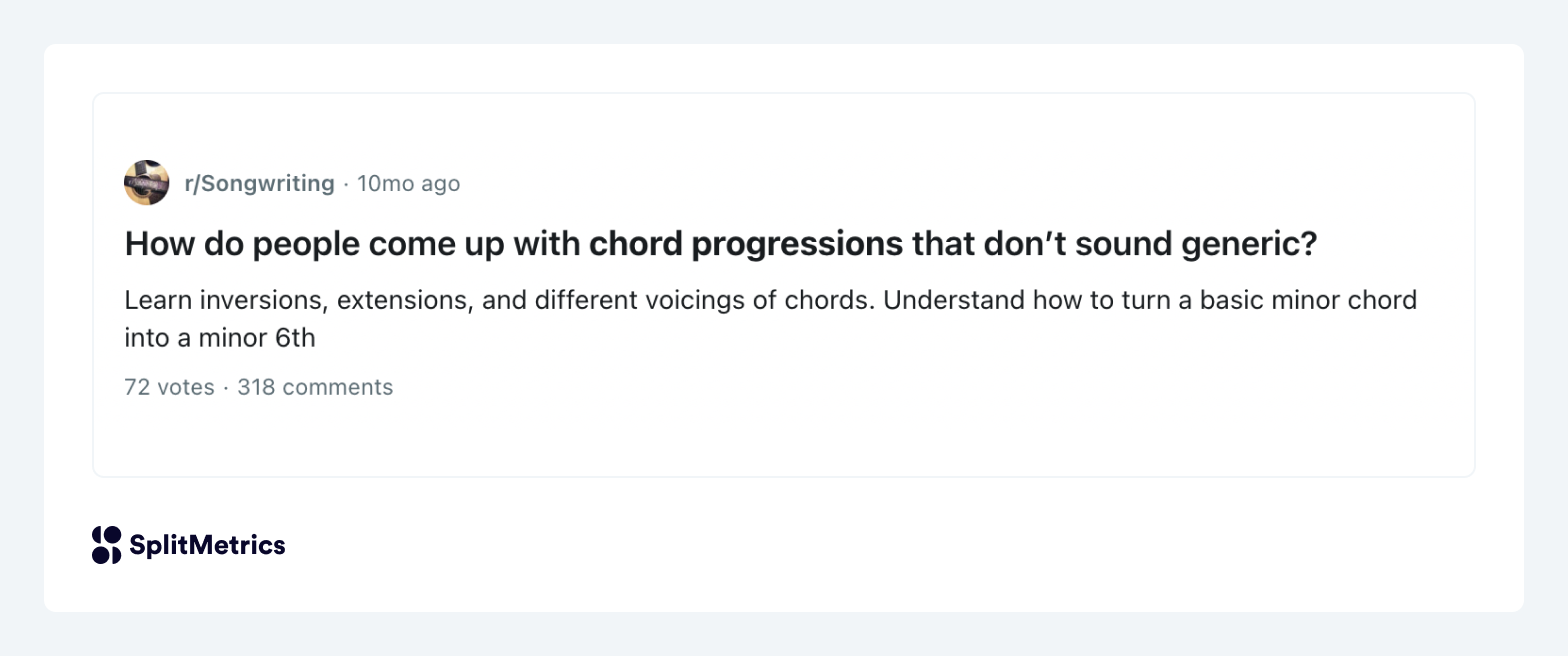
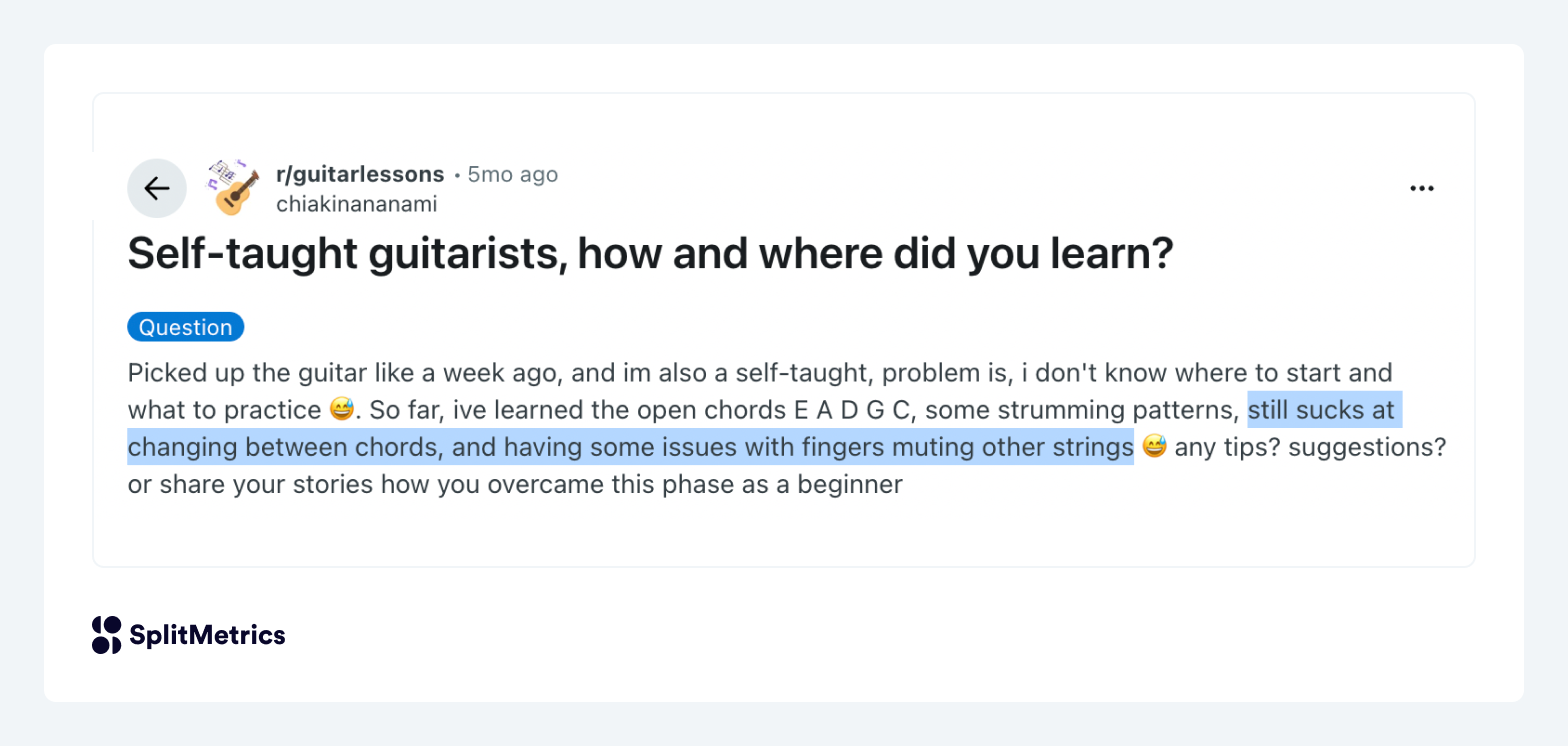
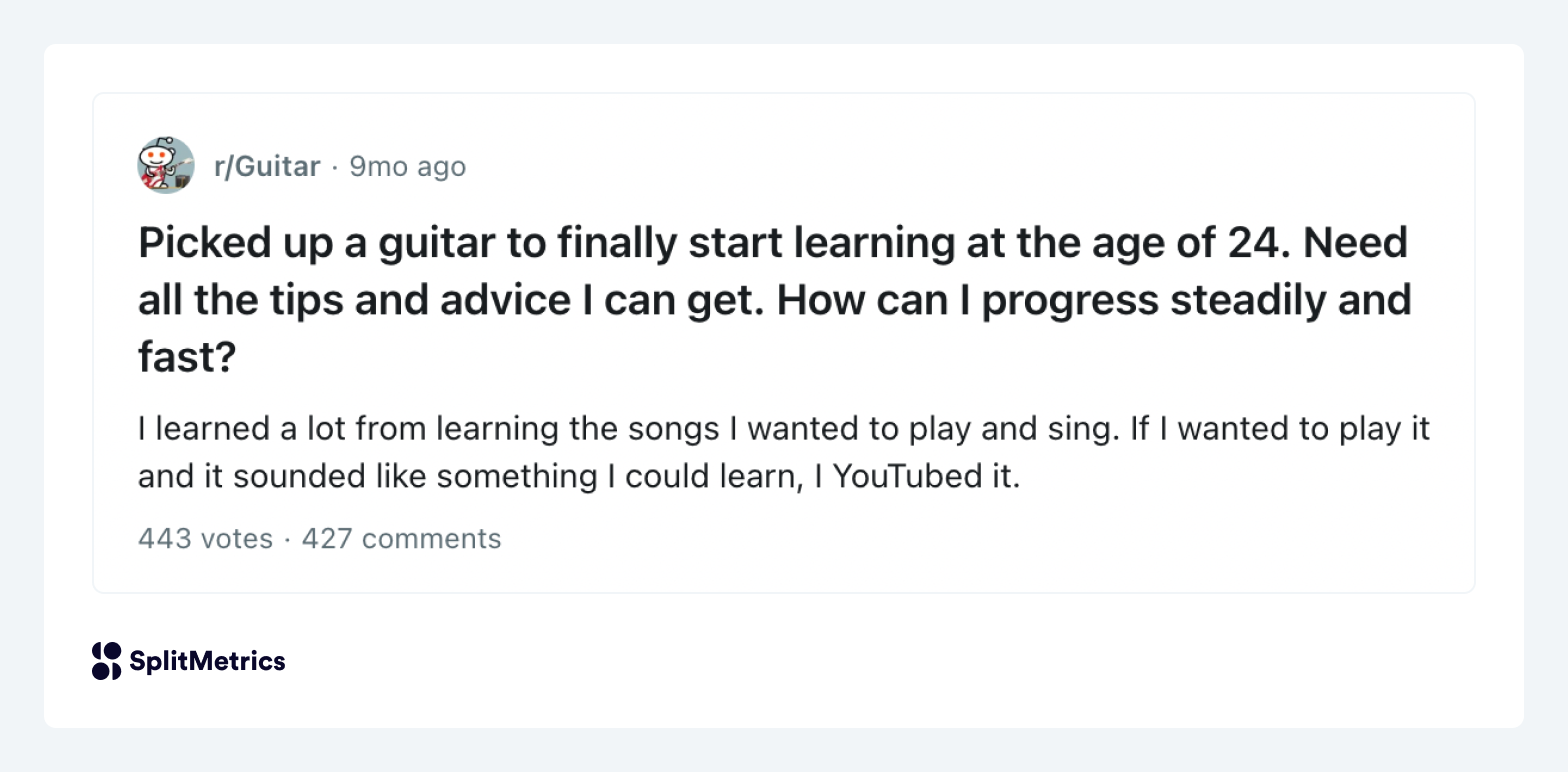
As a result, we built a map of what each segment struggled with, what progress they wanted, what held them back, and what kind of emotional tension they experienced.
| Beginners | Plateau/stuck players | Returning players |
| Don’t know what to practice Overwhelmed by information Struggle to play cleanly Slow chord switching Rhythm feels confusing Fingers hurt / uncomfortable Don’t sound like real music Feel untalented or “not musical” Compare themselves to others No clear progress Expect faster results | Not improving despite years Stuck at the same level Repeat the same songs No clear progression path Practice feels random Can’t move beyond basics Avoid challenging techniques Lack of theory understanding Know parts, not full songs Feel they hit their limit Just “playing”, not improving | Don’t know where to restart Feel like they lost previous skills Fingers don’t respond like before Progress feels slower Overwhelmed by tools/content Don’t want to start from zero Feel it’s “too late” Lack confidence restarting Inconsistent practice habit Unsure of current level Forget previously learned skills |
This research provided us with more than a list of problems. It gave us creative raw material. We could now turn real user tension into specific angles instead of relying on internal assumptions.
3. Build angles from pains, not just from product features
Once we understood the segment and its pain points, the next step was to turn those into creative directions. Instead of thinking “what features should we mention,” we started with “what kind of problem are we solving for this person?”
In the Gibson App case, one audience segment provided us with several very different creative routes we could take. For example, beginners were not one homogeneous audience. They had different fears, frustrations, and desires, so we decided to make creatives around those motivation layers.
For example, within the beginner segment:

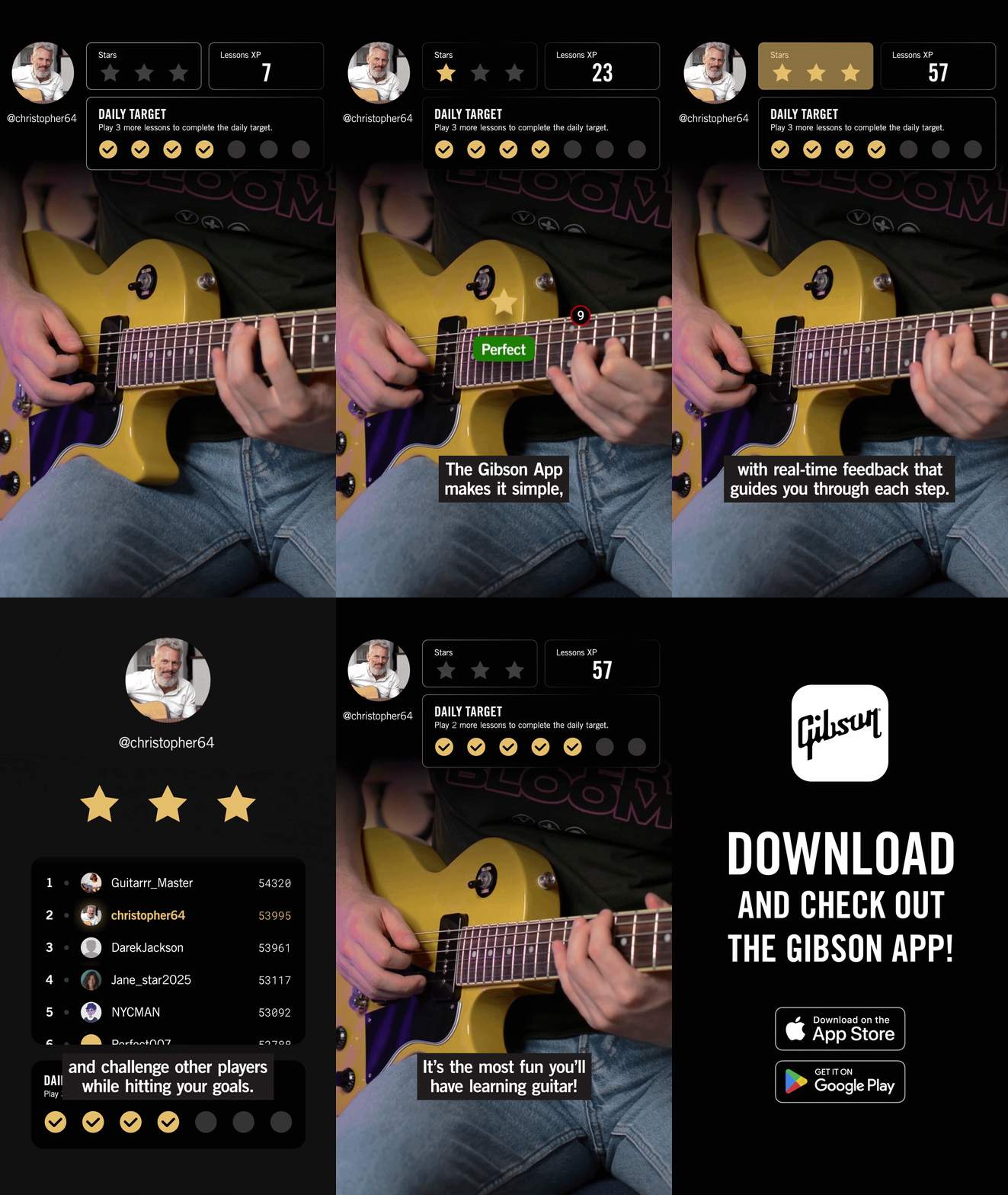
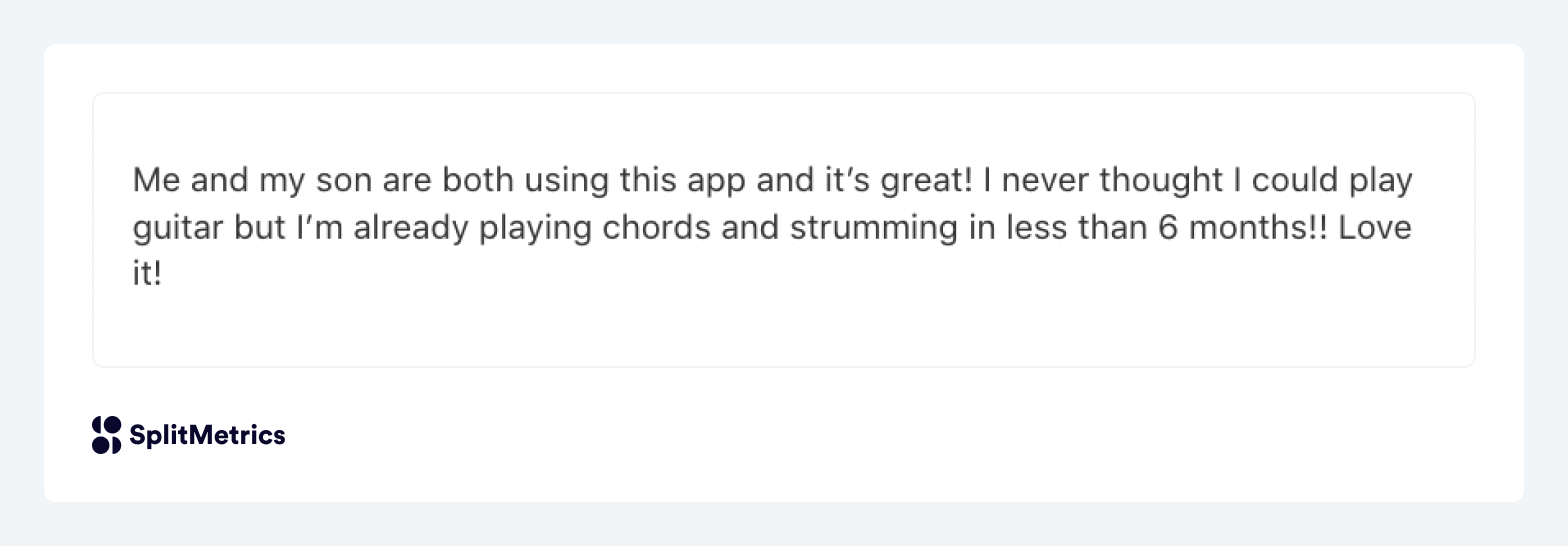
We also used app reviews as a source for strong transformation-led creatives. When users vividly explain how the product changed their experience, their testimonials can become a very strong foundation for an ad.
For example, a review-based story about someone who had never thought they could really play guitar, but started making visible progress, can become a full creative on its own.

This is an important part of the system: one segment can produce many creative angles, and one product feature can support very different messages depending on the pain it solves.
4. Test structured variations around the same core idea
After choosing the audience and the creative angle, the next step is to build variation intentionally. Instead of treating every ad as a completely separate concept, it is often more useful to test multiple versions around the same core insight.
Here’s a simple way how to think about it:
Segment → Pain → Hook → Visual → Format
That helps separate what is actually being tested.
In the Gibson App case, for example, we could take one segment (plateaued players) and one core pain (feeling stuck at the same level), and then create multiple variations around that same idea.
We varied text hooks:


The length:

And the visual direction and format:

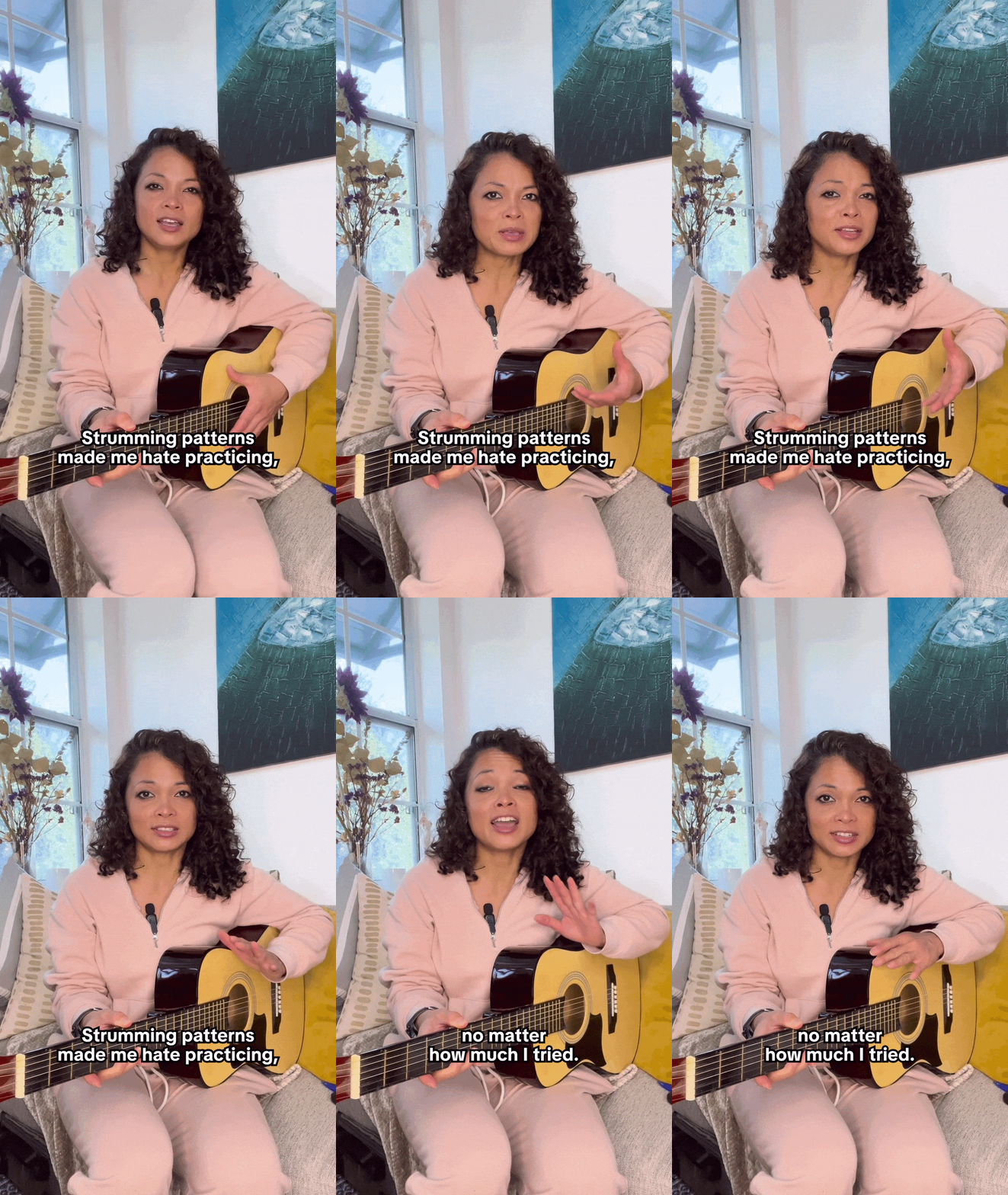
This is where the framework becomes very practical. Instead of simply producing “more creatives,” you should build a structured matrix of tests. That approach makes it easier to understand whether performance is driven by the message, the opening hook, the format, the presentation style, or a combination of them.
5. Scale patterns, not just individual ads
The final step is to identify what can be scaled across creatives. The goal is not to find one successful ad and copy it endlessly. The goal is to understand what made it work, and whether that pattern can be applied to other executions.
In the Gibson App case, once a segment and pain combination showed promise, we were able to expand it in a systematic way.
For example, we could stay inside one concept and vary music or cultural cues depending on the audience:
We could also narrow the audience inside the same segment further. Instead of speaking to beginners in general, we could create angles for more specific identities — like dads trying to balance work, family, and hobbies.


And we could keep testing inside one format family:



At this point, the system starts doing what it is supposed to do: it gives you a system to expand what works without losing structure. Creativity stays flexible, but learning stays organized.
Key takeaways
Creative performance rarely scales through output alone. It scales when production is built upon a framework that helps the team connect audience insights with structured testing and repeatable learning.
What we do is structure the process around segments, real user signals, pain-based creative angles, and a testing approach that makes results easy to interpret
A strong creative system does not replace experimentation. It makes experimentation more useful.